

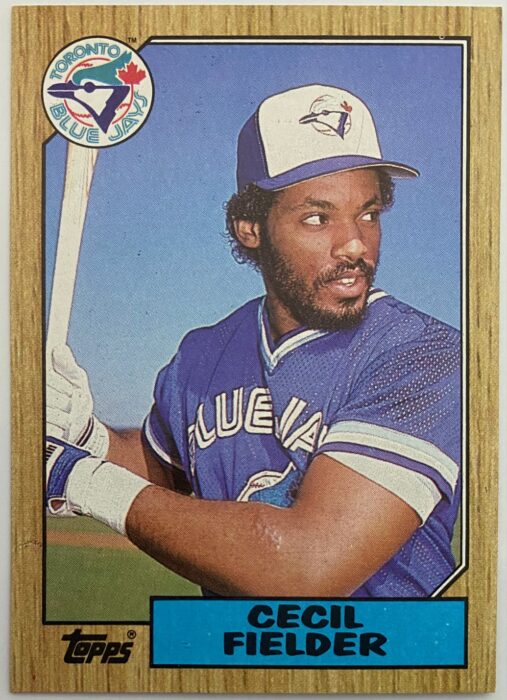
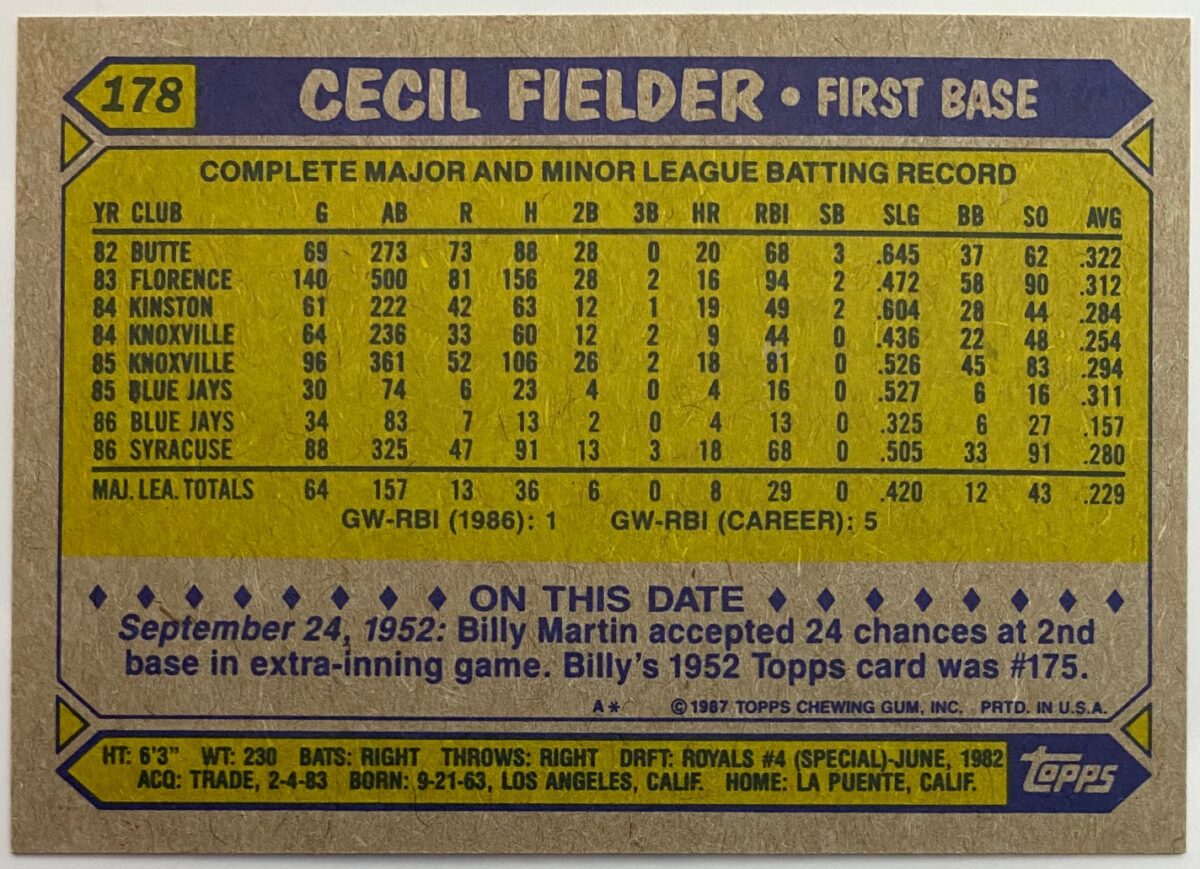

Fielder attended Nogales High School in La Puente, California. He was named an All-American while playing for the school’s baseball team in 1981. He enrolled at the University of Nevada, Las Vegas (UNLV), where he played college baseball for the UNLV Rebels baseball team. Fielder was drafted by the Baltimore Orioles in the 31st round of the 1981 amateur draft, but did not sign. He was drafted by the Kansas City Royals in the fourth round of the 1982 amateur draft, and this time did sign. In 1983, he was traded by the Royals to the Toronto Blue Jays for Leon Roberts.
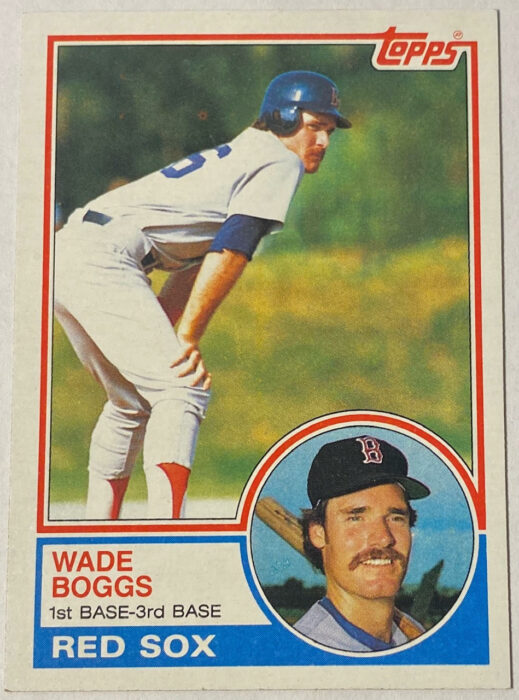
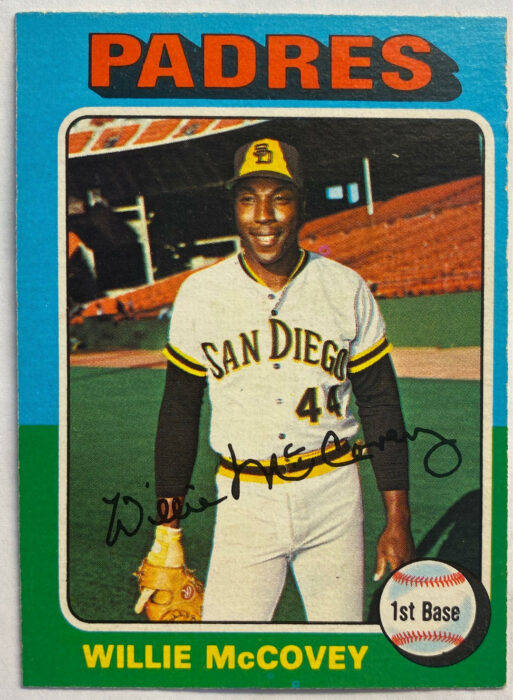
The Blue Jays promoted Fielder to the major leagues on July 18, 1985. Fielder became a part-time first and third baseman for the Blue Jays, sharing playing time with Willie Upshaw and Fred McGriff. Fielder had hit 31 home runs with 84 runs batted in during four seasons. With Toronto, he earned $125,000 per season.
In 1989, Fielder signed a two-year, $3 million contract with the Detroit Tigers. Fielder hit 51 home runs with 132 RBIs in 1990. On the last day of the Tigers’ season at Yankee Stadium, Fielder hit his 50th and 51st home runs to become the 11th player in MLB history – and only the second in the previous 25 years – to reach the 50 home run plateau. No Detroit Tigers player had turned the mark since Hank Greenberg slugged 58 in 1938, and no Tiger player has reached 50 home runs since. Fielder, whose previous high mark was 14 with Toronto in 1987, provided a sudden and unexpected emergence as a legitimate slugger. In addition to his 51 homers, Fielder also led the American League in RBI and total bases (339) that season, finishing runner-up for the AL MVP award. In 1990, Fielder also became the fourth American League player to ever have two three-home run games in a season.
With his 44 home runs in 1991, Cecil joined Hank Greenberg (1937–38) as the only Tiger players at that time to hit 40 or more homers in consecutive seasons.[9] (Miguel Cabrera joined Fielder and Greenberg in 2012–13.) Fielder repeated as AL RBI champion with 133 driven in that season, and finished runner-up in the AL MVP balloting for the second consecutive year. In 1992, Fielder avoided salary arbitration by agreeing to a one-year, $4.5 million contract, which at the time set a record for highest salary by an arbitration-eligible player. Fielder responded by leading the league in RBI (124) for the third consecutive season, becoming the first American Leaguer since Babe Ruth to do so.
During the 1990s, Fielder built a reputation for clutch hitting and power, though the Tigers continued to be no better than mediocre. His team’s fates possibly hurt him with MVP voters. Rickey Henderson and Cal Ripken, Jr. narrowly edged him for the AL’s MVP Award in 1990 and 1991, respectively. His new fans in Detroit nicknamed him “Big Daddy” for his big smile, peaceful temperament, and prodigious home runs (as well as his massive physical stature).
In his six-year tenure with Detroit, Fielder had four consecutive 30-homer and 100-RBI seasons. He had 28 home runs and 90 RBIs in 109 games during the 1994 season before it was ended by a player strike, denying him a chance to extend his accomplishments to a fifth season. He also became the first Tiger to hit at least 25 home runs in six consecutive seasons. No player in Detroit history hit as many over a six-year period (219) until Miguel Cabrera hit 227 in 2008–13, and no major league player had more home runs between 1990 and 1995.[citation needed]
Fielder was a member of the All-Star Team in 1990, 1991, and 1993. Fielder was named “Tiger of the Year” by the Detroit chapter of the BBWAA in 1990, 1991, and 1992. He is the only player to receive the award three consecutive years.
In 1993, Fielder signed a five-year, $36 million contract with the Tigers; which made him the highest paid player in baseball for two seasons (1995 and 1996).
Fielder had a reputation for being a slow baserunner. In 1996 he set a major league record by taking 1,096 games to record his first career stolen base, which occurred on a botched hit and run. He stole another base that season as well, and finished his career with two stolen bases over 13 seasons and 1,470 games. Fielder also had a reputation as a below average fielder, mostly caused by his poor speed and range. He was, however, considered a competent defensive first baseman when it came to putouts and digging infield assists out of the dirt.
Fielder’s massive power was exemplified by two long home runs:
- He was one of only four players, and the only Tiger, to homer over the left-field roof at Tiger Stadium (the other three are Harmon Killebrew, Frank Howard and Mark McGwire). He hit the homer off Oakland Athletic Dave Stewart on August 25, 1990.
- He also hit the only home run to ever travel completely out of Milwaukee County Stadium—during either the Braves’ Milwaukee history (1953–1965) or Brewers’ park history (1970–2000). It was hit off the Brewers’ Dan Plesac on September 14, 1991.