




Ralph McPherran Kiner (October 27, 1922 – February 6, 2014) was an American Major League Baseball player and broadcaster. An outfielder, Kiner played for the Pittsburgh Pirates, Chicago Cubs, and Cleveland Indians from 1946 through 1955. Following his retirement, Kiner served from 1956 through 1960 as general manager of the Pacific Coast League San Diego Padres. He also served as an announcer for the New York Mets from the team’s inception until his death. Though injuries forced his retirement from active play after 10 seasons, Kiner led all of his National League contemporaries in hitting between 1946 and 1952. He was elected to the Baseball Hall of Fame in 1975.
Kiner made his major league debut on April 12, 1946, with the Pittsburgh Pirates. He finished the season with 23 home runs, but 109 strikeouts. After the season, the Pirates convinced future Hall of Famer Hank Greenberg not to retire. Greenberg gave Kiner hours of instruction, and in 1947, Kiner led the major leagues with 51 home runs while striking out fewer than 100 times. Many of Kiner’s homers were hit into a shortened left-field and left-center-field porch at Forbes Field (originally built for Greenberg and known in the press as “Greenberg Gardens”); the porch was retained for Kiner and redubbed “Kiner’s Korner”. Kiner would later use “Kiner’s Korner” as the title of his post-game TV show in New York.
In 1949, Kiner topped his 1947 total with 54 home runs, falling just two short of Hack Wilson’s then-National League record. It was the highest total in the major leagues from 1939 to 1960, and the highest National League total from 1931 to 1997. It made Kiner the first National League player with two 50 plus home run seasons. Kiner also matched his peak of 127 RBIs. From 1947 to 1951, Kiner topped 40 home runs and 100 RBIs each season. Through 2011 he was one of seven major leaguers to have had at least four 30-HR, 100-RBI seasons in their first five years, along with Chuck Klein, Joe DiMaggio, Ted Williams, Mark Teixeira, Albert Pujols, Ryan Howard and Ryan Braun.
Kiner’s string of seasons leading the league in home runs reached seven in 1952, when he hit 37. This also was the last of a record six consecutive seasons in which he led Major League Baseball in home runs, all under the guidance of manager Billy Meyer and Pirate great Honus Wagner. He was selected to participate in the All-Star Game in six straight seasons, 1948 to 1953.
The equally famous “Home run hitters drive Cadillacs and singles hitters drive Fords,” frequently misattributed to Kiner himself, was, by his own account, actually coined by teammate Fritz Ostermueller. Footage of Kiner hitting a home run in Forbes Field can be seen in the 1951 film Angels in the Outfield.
On June 4, 1953, Kiner was sent to the Chicago Cubs as part of a ten-player trade. The Pirates traded Kiner, Joe Garagiola, George Metkovich, and Howie Pollet to the Cubs in exchange for Bob Addis, Toby Atwell, George Freese, Gene Hermanski, Bob Schultz, Preston Ward, and $150,000. This was largely due to continued salary disputes with Pirate general manager Branch Rickey, who reportedly told Kiner, “We finished last with you, we can finish last without you.”
Kiner played the rest of 1953 and all of 1954 with the Cubs, finishing his career with the Cleveland Indians in 1955. A back injury forced him to retire at the age of 32, finishing his career with 369 home runs, 1,015 runs batted in and a .279 lifetime batting average. He hit better than .300 three times, with a career best .313 with the Pirates in 1947.
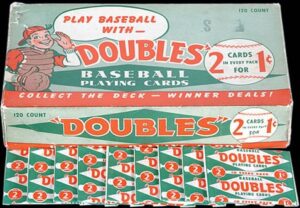
Click here for some more information about the 1951 Topps Cards


4 Responses
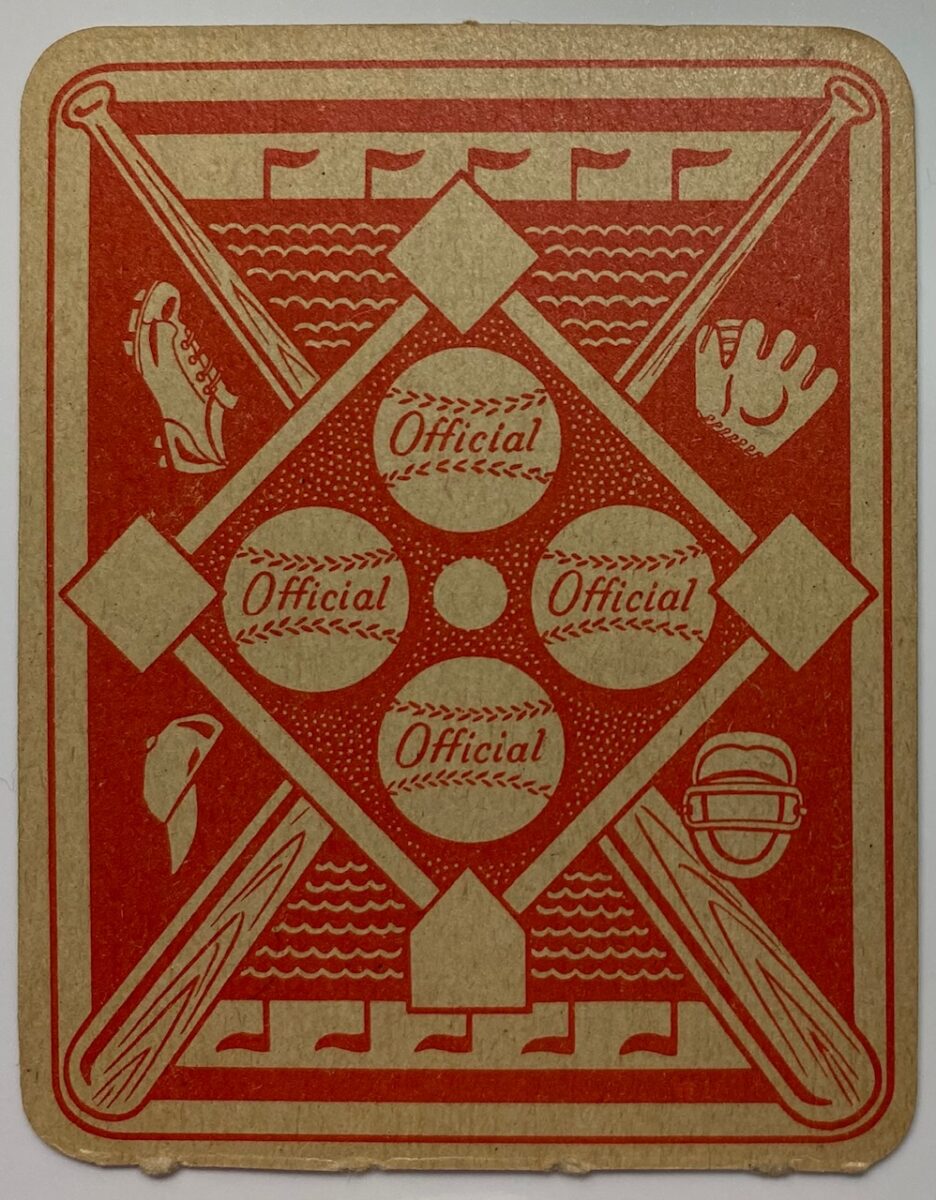
Great smile by Kiner in this card, which I don’t think you see too much in the set. I like both the front and back condition of this card. Definitely has a “playing card” feel to it. Crazy how much this design differs from the 52s which are much more baseball card like. Awesome to have a first set of Topps addition on the site!
All the 51s have those bumps on bottom or top of card. Maybe they attached somewhere or had to tear off?
“Additionally, 1951 Topps Red Backs Baseball cards are largely found in single-card form, but there is a more limited panel version that includes two cards attached with perforation. While the panel cards do carry a premium, both versions display the perforation edges. Although rare, factory sets of panels were also issued and have surfaced at auction.”
Whoa! Research dept on overtime here!